

Stanley Workforce Housing
The City of Stanley is in the process of developing Workforce housing. This small community lacks stable year round housing for many essential workers like teachers, firefighters, and healthcare providers. Through grants and other funding sources Stanley is working to improve housing availability in the community.
We appreciate the community’s patience, engagement, and continued input throughout this long process. Addressing workforce housing is complex, but with thoughtful planning and collaboration, we are taking an important step forward in supporting the local workforce and community.
Overview
Jump to section below by clicking on the link.
Summary of Key Points
-
4 acres on Museum Drive was given to the City from the Forest Service by an act of Congress to develop workforce housing.
-
The City selected a developer, Northwest, to construct and manage housing.
-
The City will have oversight on what housing is built and how it is managed and who it is rented to.
-
The developer will lease the land from the City and own, manage, and be responsible for the buildings until the end of the land lease.
-
-
The City received a $4 million HUD grant to help fund the project.
-
The City plans to use the HUD grant and City savings along with loans acquired by Northwest to build 20 townhomes.
-
This housing is for the local workforce with a priority on permanent essential workers. If permanent essential workers do not fill all 20 units, as predicted, the other units will be open to all local workers.
-
Workers must work in Stanley and the nearby surrounding area to qualify for the housing.
-
-
The City is working with a specialized housing attorney and project management team to make the project as successful as possible for the community and City.
Timeline of the Project
Pre 2025
The City of Stanley has held numerous community meetings over the years to get to where we are. The Community has also participated in various surveys.
Summary of Surveys
-
2024 Chamber Survey – 86% of respondents said housing availability was limiting hiring and that 120 employees needed housing. In general, people reported that essential workers should be prioritized.
-
A 2020-2021 survey by RBDC reported that 122 high season employees struggled to find housing, and most of the current housing was less than ideal for employees. Some businesses reported they were willing to subsidize housing costs in the future. Local business owners also reported that they lack of housing is limiting business’s ability to hire or recruit good candidates and some positions are going unfilled.
-
Surveys from 2004, 2016, 2019, and 2024 all reported that over 100 people needed housing.
Land and Funding
-
On On August 7, 2015 the 4 acre parcel on Museum Drive was transferred from the Forest Service to the City of Stanley through Public Law 114-46 known as the Sawtooth National Recreation area and Jerry Peak Wilderness Additions Act.
-
On December 27, 2019 the deed transfer for the property was completed and recorded.
-
March 9, 2024 Congress approved $4 million allocation from the Community Project Funding (CPF). This funding is channeled through Housing and Urban Development (HUD) but does not come with the typical HUD requirements. These funds have generally been referred to as the 'HUD Grant'. The funds expire August 31, 2032.
2025
Selecting a Developer
-
At the March 14th meeting the City Council unanimously selected Northwest Real Estate Capital Corp (Northwest) as the developer for the workforce housing project as it ranked the highest through the process that came from the Eastern Idaho Economic Development. The City sent out a Request for Qualifications (RFQ) and received three applicants by the due date of February 28th. The same process was followed to select an engineer for the infrastructure part of the project.
-
April 2 the City hosted a Town Hall where the Mayor presented the steps accomplished so far and the plan for what was to be completed during the summer. No questions were asked after the presentation.
Spring and Summer
-
S&A Engineers was selected to be the engineer for the workforce housing project.
-
Northwest contracted to complete the Market Study which was required by HUD. The Market Study is an analysis of rents and housing in the area.
-
A contractor was selected to complete the environmental site analysis, wetland survey, and cultural survey, as required by HUD. SWCA completed the majority of this work during the summer. The City received the final environmental analysis but SWCA continued to work on the cultural survey.
-
The City had numerous conversations with geothermal engineers. Developing geothermal infrastructure for the housing projects will be very expensive and will depend on the City obtaining a grant to cover the cost of the infrastructure. With the current administration there are very few grant opportunities or funding sources.
-
The City contracted with Altura to help support the City in applying for a Community Development Block Grant (CDBG).
Priorities and Community Input on Design
-
At the June 12 Regular Council Meeting the Council and Mayor discussed if the essential workers, who are prioritized with this housing, will meet the income restrictions. The thought was that they probably wouldn't but the City will further research this aspect.
-
June 25th the City held a Town Hall where Northwest provided the first Visual Preference Survey. This was a chance for the community to give input and provide preferences for the building materials, roof/building style, and community space area of the housing that would be developed.
-
Another Town Hall was held August 15th for the Second Visual Preference Survey where Northwest provided basic renderings developed from the previous decisions by the community. The community could again vote on their preferences for roof lines, colors, and layout of the site. At both visual preference meetings John Vance, the Director of Development for Northwest, was present to answer questions.
Determining Priorities and Feasibility of Low-Income Housing
-
At the July 15th Special Council Meeting the council discussed the fact that low-income housing would not meet the community’s needs and would like Northwest to investigate other funding mechanisms. See below and the Low Income Housing section for more information. Some council members also suggested not working with the Developer selected and that the City could just use the 4 million dollars to build fewer units (approximately 10 or less) and have management done by the City or hire a local company to manage the project after it was built. There were numerous questions after this meeting that were investigated.
-
Why would Low Income Housing not meet the communities needs?
-
If low-income housing tax credits are used, residents of the housing have to meet income restrictions. Residents of the housing would have had to have averaged a household income of $32,560 for a single person household and $37,180 for a 2-person household. Most essential workers would not have qualified for the housing due to their income. Household income averaged $70,200 for the essential workers who reported estimates of their household income. The median household income was $67,000. Most households were one or two person households.
-
17 workers who reported were in one of the following positions reported their household size and income. Positions: Teacher, Nurse/EMT, City Employee, Fire Chief, Sewer Association, Skilled Labor (mechanic, plumber, electrician, equipment operator, builder etc.) Law Enforcement, Library Staff, Forest Service Employee, Local Business Manager Position, Post Office worker. (Data was not collected from all these positions).
-
-
While the data set of incomes of essential workers is relatively small it shows that overall households with workers in professional positions would not qualify for low-income housing. It is these professional, essential workers that the community and council have prioritized for housing.
-
-
In a July 31 Special Council Meeting the Council reviewed estimates of construction and the feasibility of the City building units with just the HUD grant (see summary below). Some Council members were hoping that revenue from the rent could be saved to build future housing. The Council also defined the priorities for housing as listed below.
-
A Stanley builder previously provided the City with estimates of the cost per square foot of construction ($500/sq ft). Those numbers were used to estimate how many units could be built. Estimated rents were used to calculate the difference between revenue and expenditure in the management and operations of the housing. This information was used to determine how long it would take before there was enough savings to build more units. The cost of infrastructure was NOT included in these estimates. All numbers in this scenario were estimates but provide basic information on the feasibility of various scenarios.
-
If the City has outside funding to cover the complete cost of infrastructure, two 1-bedroom (1000 sq ft) and four 2-bedroom (1200 sq ft) units could be built. With rental rates at $1000 for 1 bedroom and $2,000, it would take approximately 100 years of saved revenue from the project to be able to build 14 more units.
-
If the City has outside funding to cover the complete cost of infrastructure AND another 1.7 million in funding, three 1-bedroom (1000 sq ft) and seven 2-bedroom (1200 sq ft) units could be built. With rental rates at $1000 for 1 bedroom and $2,000 it would take approximately 26 years of saved revenue from the project to be able to build 10 more units.
-
-
Priorities for the project:
-
#1 Housing for essential workers (This does not preclude other local workers from living in the housing).
-
#2 Rent Price – keeping it low/affordable
-
#3 Livability, appealing, quality, aesthetically appealing
-
#4-6 Availability of family units, balance cost with infrastructure, storage & pets
-
-
Bringing the Property into City Jurisdiction and Evaluating Finances
-
After a public hearing on September 11th the Municipal District Zone was updated to include workforce housing as a permitted use.
-
At the September 11th Regular Council meeting the Mayor provided an update on where various aspects of the workforce housing project stood with a focus on the completion of HUD requirements for environmental and cultural surveys as well as the restrictions that the CBDG grant would place on the project.
-
After a public hearing on October 30th the 4 acres workforce housing property, and some surrounding Forest Service land was annexed into the City Limits. Annexation does not change ownership of the land; it just changes jurisdiction. All City Code (Ordinances) now apply to the City’s workforce housing project.
-
John Vance, from Northwest, joined the November 13th Council Meeting to provide basic information on the finances of the project. Northwest had provided a few options for how the City could contribute to the project. The City can contribute saved option tax over a period of time to be able to continue receiving interest on the account. In this meeting, the breakdown of the room units was modified by council request to six 1-befroom units, eight 2-bedroom, and four 3-bedroom units.
-
The City staff worked with Northwest and the City Attorney to refine the financial plan and answer outstanding questions from the Council.
-
-
December 1st the council held a workshop to review the financial plan. There was a discussion between council members about the difference between low income and affordable housing for professional essential employees. Some council members expressed concern about the workforce housing affecting the local rental market. There was concern expressed by some council members for having a long term lease with the developer and the City being burdened with management of the project for the long term.
-
The council continued to discuss the feasibility of the City taking on the project with out the support of a developer.
-
A more detailed evaluation of what the City could build and manage just using the HUD grant was provided to the council after the meeting.
-
Initial evaluations show that if the City used the HUD grant to cover the cost of infrastructure and construction at $400/sq ft (lower than quoted by a local builder) the City could construct two 1-bedroom units and two 2-bedroom units (4 units total). If $1,400 was charged for the 1-bedroom units and $1,800 was charged for the 2-bedroom units the City would just cover the estimated management cost.
-
-
-
-
The City held a Special Council Meeting December 18th to review the financial plan, the Option to Lease (a precursor to the lease agreement), and to vote on suggested names for the workforce housing project. Northwest cannot move forward with the project to get funding, engage architects, and contractors without an Option to Lease and approved financial plan. Two council members did not show up and so there was not a quorum, and the meeting could not be held.
Fall and Winter 2025
-
The geotechnical survey was completed was completed by Northwest to evaluate the soils to determine engineering needs.
-
The City decided not to pursue the CBDG grant as it would put low income restrictions on the units and increase cost by adding Build America Buy America (BABA) requirements.
2026
January Community Input
-
Many community members attended a Town Hall and following workforce housing meetings. The general feedback was that the proposed rents were too high. The community thought the unit size could be reduced. Some people thought garages were necessary, others thought they were not. After the meeting the City followed up with Northwest to make changes to the design and find ways to lower the rent.
-
Northwest agreed to make changes to the design to lower the cost by removing some amenities including the kitchen island, the master bathroom in the 3 bedroom units, and the overall living space would be reduced. The garages on some units would be removed and two more 1 bedroom units would be added.
-
The updated projected resulting from these changes are:
-
1 bedroom, no garage - $1,100 (total of 4 units)
-
1 bedroom, with garage - $1,400 (total of 4 units)
-
2 bedroom, no garage - $1,600 (total of 4 units)
-
2 bedroom, with garage - $2,000 (total of 4 units)
-
3 bedroom, no garage $2,100 (total of 2 units)
-
3 bedroom, with garage $2,400 (total of 2 units)
-
-
See the most up to date rents here.
-
-
The Option to Lease was signed February 12, 2026. This agreement is between the City of Stanley and the developer, Northwest. It is to provide some surety to Northwest that the City will lease the property to them so they can work further on obtaining financing and planning. The City and Northwest will now work in good faith to negotiate and sign the Ground Lease as well as other documents.
-
In March the City Council voted on 119 names submitted by the public for the Workforce Housing project. Bluebird Bend was selected.
Legal Support
-
The City is currently working with John McDevitt with Skinner Fawcett LLP to provide legal guidance to the City on the legal framework between the City and Northwest. The following is a list of the various documents that will be negotiated and eventually signed to ensure the City and communities interests are protected through this project.
-
Ground Lease – A long-term lease agreement (65-year term) between the City and Northwest documenting the terms and conditions under which the City will lease the property to Northwest.
-
Regulatory Agreement – An agreement between the City and Northwest that contains the occupancy/eligibility restrictions for the workforce housing units.
-
Development Agreement – An agreement between the City and Northwest that outlines how the property will be developed.
-
HUD Grant Subrecipient Agreement – An agreement between the City and Northwest pursuant to which the City grants HUD funds to Northwest subject to compliance to HUD requirements.
-
Local Option Tax Contribution Funding Agreement – An agreement between the City and Northwest that outlines the terms associated with the City providing additional funds to the project using the City’s Local Option Tax.
-
-
The City held a Town Hall in April on the Regulatory Agreement. The community provided feedback on how they thought the agreement should be structured. The majority of the suggestions were included in the agreement.
Project Management Support & Permitting Approvals
-
In April the City sent out a RFP to select a project management firm for the project. Perspective Planning was selected by the council and a contract to work with them was signed in May. Brad Cramer of Perspective Planning along with his subcontractor Ryan Singleton of Mountain West Engineers have been advising the City and supporting the City in moving forward with the Workforce Housing Project.
-
In May the City Council approved the preliminary site plan after review by the project management team. This step needed to be completed to submit permits to the Army Corps of Engineers, the Forest Service for Special Use Permits, complete required cultural surveys with SHPO, and complete consultation with the Secretary of Agriculture.
-
In June a specialist from the Army Corps of Engineers visited the site. The City is trying to obtain a jurisdictional determination on the wetlands on the property as it will effect if mitigation is needed for development.
-
In July the City:
-
Received approval for the project from SHPO which completes the cultural survey requirement.
-
Received confirmation of consultation from the Sawtooth National Forest Forest Supervisor who was delegated to act on behalf of the Secretary of Agriculture.
-
Received a Special Use Permit from the Forest Service to cross Forest Service Land to connect to the Stanley Sewer line.
-
Summer
-
Northwest is working with Glacier Bank to obtain financing. Northwest plans to use 501c3 tax exempt bonds through IHFA to fiance the project as they have slightly lower rates than a traditional bank loan.
-
The City has received reports from the project management team that review the agreements, pro forma, and design plans.
Approval of Agreements
-
At an August workshop the Council met again with the project management team, the housing legal team, and Northwest to review the agreements and wrap up any concerns or questions on the agreements. Many of the concerns addressed can be found in the FAQ section.
-
A meeting is scheduled September 9, 2026 at 5pm to hold a vote on the agreements
Looking Ahead
-
For the project to progress, the City and Northwest must sign the Agreements.
-
The City and Northwest are working to complete further permitting with the Forest Service, DEQ, IDWR, and the Army Corps of Engineers.
-
Northwest plans to break ground in October to complete the infrastructure.
-
Northwest plans to line up all contractors and secure bids and materials to lock in prices this winter and so that work can start as soon as possible next spring.
-
The City's Project Management team will review and approve the construction plans for both the site and buildings. They will also complete periodic inspections throughout construction.
-
Occupancy is predicted to begin in early 2028.
Agreements
Five agreements will regulate Northwest and how the workforce housing is developed and managed. The City has worked with other cities, housing attorneys, and the project management team to ensure the City's interests are protected. If changes are needed in the future, all the documents can be amended even if there isn’t an explicit provision. Both parties must agree to the amendment, and it must be in writing.
Ground Lease
It establishes the terms and conditions for leasing the City land to Northwest Real Estate Capital Corp, along with the obligations for developing workforce housing in two phases.
-
What if Northwest doesn't perform and they have leased the whole property? How will the City be able to build more housing or seasonal housing?
-
There are required milestones that Northwest must meet to be able to retain the ground lease in Phase 1. If Phase I milestones are not met, half of the property is automatically removed from the ground lease.
-
If Phase I milestones are met but Phase II milestones are not met, Northwest will retain the ground lease on Phase I and will continue to manage the project as described in the agreements. Half of the property (for Phase II) will automatically be removed from the ground lease, and Northwest will no longer have the right to develop it.
-
If all Phase I and II milestones are met by Northwest they will continue with the phased development with City input and review.
-
This provides the best chance of success for Phase I and II, incentivizes and requires Northwest to perform, while protecting the City if Northwest does not perform.
-
Northwest is planning infrastructure so that it will serve units in Phase I and II where cost effective and appropriate.
-
The City’s team of consultants believes that including Phase I and II in the ground lease with specific conditions protects the City, provides the most flexibility, and is the best way forward.
-
-
Will signing the lease with Northwest mean that the City has no control over what is built and how it is managed?
-
No. The draft lease states that the “Tenant (Northwest) has submitted or will submit to Landlord (City of Stanley) for approval comprehensive plans and specifications for the construction of the Improvements (the "Construction Plans”).” It further states that “in the event (a) Tenant makes any substantial modification to the Construction Plans or (b) Tenant makes any substantial modification to the Improvements at any time after construction of the Improvements, Tenant shall submit modified plans to Landlord for Landlord's approval.” The lease will specify how the City will exercise control and approval over many aspects of the property and how its interests will be protected. This will include issues such as how the housing will be maintained by Northwest, and how rents will be set and adjusted.
-
The City will be the Landlord, and must retain ownership of the housing site in perpetuity as directed by Congress through Public Law 114-46.
-
Development Agreement
Specifies infrastructure requirements, including possible geothermal heating, construction of townhomes, design review by the City, and a commitment to construct Phase 1 and Phase 2.
-
How does the City make sure Northwest builds to plans and completes a quality product?
-
The Development agreement will include a site plan and architectural plans that Northwest must follow. The City's project management team will review all the construction plans and approve them prior to construction. There will also be several building plans. Northwest must get all the plans and construction approved by the City's team. If they don't follow the agreements they will loose their right to develop the property and wont be able to rent the units.
-
Regulatory Agreement
It specifies the lease terms for individual housing units (not the master ground lease terms), occupancy requirements and priorities, initial monthly rental rates for the 1, 2, and 3-bedroom townhomes, and procedures for increasing or decreasing the rents.
-
Concern that the rents will immediately increase
-
The rent rates are established for the first year of leasing in the Regulatory Agreement. Any rent increases will be based on CPI and any increases over 4% (even if CPI is over 4% must be approved by the City.
-
-
Will seasonal workers be able to live in the housing?
-
Yes, any local worker as defined in the agreement will qualify for housing. Priority will be given to essential, then permanent workers before seasonal workers.
-
-
Concern that a stability in housing is created
-
This is meet by always providing an option to renew lease for essential workers, and an option to renew a lease for other employees provided there isn't a higher priority employee needing housing. Providing a one year lease and establishing a clear priority system so tenants know where they stand will help create transparency and stability.
-
-
How do you prevent businesses from housing all their employees and taking spots away from other people?
-
The Regulatory Agreement has been updated to reduce the number of employees per business allowed in Tier 2 to 1 employee per business. A second employee would be allowed in Tier 3. A business is defined by having a city of Stanley business license. This will prevent one LLC who has multiple different store fronts/Stanley business licenses from having as many spaces and is intended to level the playing field.
-
-
Can people from outside of Stanley rent the units?
-
Not unless they are working for a local business. Remote workers do not qualify.
-
Local Option Tax Agreement
This Agreement between Northwest and the City will specify the terms under which the City will provide option tax funds to help finance Phase 1.
-
How much is the City contributing?
-
The City has been saving Local Option Tax to invest in a workforce housing development. All this funding is currently held by the City and does not rely on future revenue. The agreement specifies that no more than 1.265 million will be contributed to the project. This funding will be paid over time to Northwest for up to 22 years. There is a maximum annual payment and the total paid will never exceed 1.265 million. This set up is advantageous to the City and the community as it allows the city to continue earning interest on the savings over time and it lowers the rents for the future tenants. The City also will receive 50% of any surplus of revenue from the project. This amount is not expected to be much or cover the full amount of the annual payments but it is expected to off set how much the City will need to contribute.
-
Grant Subrecipient Agreement
This agreement transfers all the requirements of the HUD grant to Northwest and lays out the terms under which the City will transfer the $4 million HUD grant to Northwest to help make the project financially feasible.
FAQs
Has the City had any professional review of the project?
The City engaged with Skinner Faucett LLP (John McDevitt) to provide legal advice on the housing agreements. The City hired Perspective Planning (Brad Cramer & Sub-consultant Ryan Singleton of Mountain West Engineering) to assist with project management and technical review.
What will the rents be?
See Unit Breakdown and Rent section.
What about seasonal employees?
The community has repeatedly voiced at public meetings that they want to prioritize permanent, essential workers. The project management team has echoed the community and said that it makes the most sense to provide housing for essential workers since they are essential to making the town run. The Regulatory Agreement ensures that essential workers are prioritized while always allowing any local worker who meets the basic requirements to live in the housing if there is space available. The City can meet the communities’ priorities, while still providing opportunities for seasonal workers if the units are not filled. The Ground Lease includes the intent that Phase II will contain seasonal housing.
What if Northwest can't fill all the units?
Various studies and surveys over the last 20 years have shown a repeated need for housing for over 100 local workers. Northwest and the City have reviewed the numbers and surveys. While the target audience is essential workers, this housing is open for all local workers. There are options for seasonal employees to rent or for people to share a unit and have roommates. Northwest is confident the units will be filled. Northwest has calculated a 10% vacancy rate for the project. That means that financial calculations are based on an average 2 units will be vacant all year. A typical vacancy rate is 3-7%.
Who pays if the housing isn't fully occupied, the rents don't cover the cost of operation, or Northwest leaves or goes belly up?
Northwest is financially responsible for this project. Northwest is the guarantor for all loans and will be responsible, along with the bank, if the project is not financially solvent. If Northwest leaves or goes belly up during construction the Bank will be responsible for completing the project. If the bank took over the project there would be the same expectations of the bank as there were of northwest, and same expectations for the city and the project. If Northwest wants to leave the project after the buildings are completed the City must approve the transfer or sale of the project to any other entity. All the same requirements would apply to the new entity. The City could choose to add more requirements as well. The City is contributing funding of the CPF Grant managed through HUD. This grant will be used for construction of the project per the Subrecipient Grant Agreement. The City is contributing saved LOT to support the operation of the project as specified in the Local Option Tax Agreement. Both amounts have a cap of how much the City will contribute.
Will the units be designed for Stanley's weather? What is the heating system?
The City and Northwest have completed studies and reviews and have determined there is a very high potential for success in the development of a geothermal heat pump system to heat and cool the units. This geothermal heat pump system will provide efficient and cost-effective heating and cooling to the tenants’ benefit. Experienced engineers are developing the best system for the project.
What happens if a tenant looses their job or wants to leave?
Like with any rental lease, if a tenant signs a lease they are signing a contract to rent the unit for a specific amount of time for a specified cost. If the tenant breaks the contract they may face penalties. The tenant will not loose their housing if they loose their job. If their employment changes, they will need to report that change when they apply to renew their lease. They may not qualify in the same tier if employment changes.
What happens if there are cost overruns in the project?
If there are predicted overruns before the City signs the agreements, they will be discussed and likely included in the budget which is included in the agreements. If there are cost overruns afterwords Northwest must figure out how to manage those overruns. There is a contingency line included in the budget that can be used to absorb some cost overruns. Northwest has a lot of experience constructing multi family units within tight budget constraints. They have a good team of engineers, architects, and general contractors that are budget conscious.
Business already provide housing for their employees why do we need more?
It is helpful that some local business provide housing for some of their employees. However, that does not necessarily mean that the housing is appropriate or desirable when considering each employee’s circumstances. The same is true for other permanent employees who have found temporary and insecure housing in the community. Some employees who have housing still consider themselves housing deficient and desire the type of housing options that the City’s project will provide.
The City has repeatedly heard from the community that there is a need for essential employee housing. The majority of these essential employers are unable to provide employee housing. The Stanley School, Library, City, Fire Department, Post Office, Sewer Association, Search and Rescue, and Stanley Ambulance do not have any employee housing. The City is focused on providing quality and long-term housing for essential workers. Surveys have repeatedly reported the need for housing for over 100 employees locally. This project is intended to meet the needs of essential workers and hopefully provide housing to some of the other local workers who are housing deficient.
Why are the rents not lower?
The projected rental rates must be adequate to ensure the financing, operations, and maintenance of the project are economically viable. If more units were built, due to economies of scale, rents may be lowered, but the council expressed they did not want more than 20 units built. The the projected rents are within 30% of the income of the majority of surveyed permanent essential workers. Read more here. Also, some businesses are subsidizing or providing below-market-rate rental rates for their employees. Some have indicated that they might be interested in subsidizing rents for their employees in the workforce housing.
Why is the City not building low-income housing?
If low-income housing tax credits are used, residents of the housing have to meet income restrictions. Residents of the housing would have had to have averaged a household income of $32,560 for a single person household and $37,180 for a 2-person household. Most essential workers would not have qualified for the housing due to their income. Household income averaged $70,200 for the essential workers who reported estimates of their household income. The median household income was $67,000. Most households were one or two person households. Read more here.
Why is the City working with a developer?
The City has chosen to leverage their funds and work with a developer, Northwest, who can obtain further funding through loans. This will provide funding for 18 units to be built in a mix of 1-, 2-, and 3-bedroom units.
Read more here... ...and here.
Can the City use the 4 million and do it on their own?
Yes, that is an option. Initial evaluations show that if the City used the HUD grant to cover the cost of infrastructure and construction at $400/sq ft (lower than quoted by a local builder) the City could construct two 1-bedroom units and two 2-bedroom units (4 units total). If $1,400 was charged for the 1-bedroom units and $1,800 was charged for the 2-bedroom units the City would just cover the estimated management cost. To ensure proper management the City would likely need to offer housing to at least 3 employees. Read more here.
Who is profiting from this project?
No one is gaining a financial profit. The community will benefit by being able to provide essential employees and other workers stable, year round, quality housing. This will enable more options in hiring and better retention for employees. If building affordable workforce housing was a highly profitable scheme, it is highly likely a private corporation would have already done this. The developer is a non-profit. Read more here.
Will the City loose control of the workforce housing if a developer constructs and manages the housing?
No. The City will always own the land, and the housing development will become property of the City at the end of the lease. The ground lease states that the City must approve anything that is built on the property. Although the City plans to sign a housing management agreement with the Developer, neither the lease nor the management agreement turns complete control of the housing over to the Developer. The City will ensure that its ordinances are enforced, that the housing remains dedicated only for workers in Stanley and nearby areas (per Congressional law), and that the housing remains attractive and comfortable, serving the priorities and needs of the Stanley community.
Living in Workforce Housing
Unit Breakdown & Rent
The projected rents listed are based on reported incomes for essential workers and feed back from the community. The listed rent rates include the following utilities: water, trash, sewer. The rental rates do not include electric. The current plan is to have a geothermal heat pump system and if that is the heat source provided, a small addition to the rent will be charged to cover the cost of management and replacement of the system.
Projected rent/month by type of unit. There are a total of 20 units planned, the breakdown is listed in # of units.

Who Can Rent a Unit?
The City has worked with housing attorneys to develop the Regulatory Agreement that specifies who can live in the housing, who has priority, and some of the regulations governing rents and leases. As the community has requested, essential workers will be prioritized but any local worker can live in the housing.
More information and specifics are covered in the Regulatory Agreement. A brief summary is below of the key aspects.
To qualify applicants must:
-
Work in Stanley. The boundary extends from the county line south on Hwy 75, the county line south on Hwy 21, and to the Library and Clinic taxing district east on Hwy 75 which is just west of Torrey's. (Short term vacation rental owners/managers and remote workers do not qualify).
-
A letter from their employer stating they qualify for for housing as an employee of the business.
-
Can not own a home or developed real estate in Stanley.
Priority will be to applicants with Tier 1 having the highest priority and Tier 5 the lowest priority.
-
Tier 1 Essential – This tier shall be assigned to Permanent Employees in the following professions:
-
Stanley School Employee; Capped at 4 units
-
Salmon River Clinic Employee Capped at 2 units
-
Stanley City Government Employee, does not include elected officials, Capped at 3 units
-
Stanley Post Office Postal Worker, Capped at 2 units
-
Stanley Sewer Association Employee, Capped at 1 units
-
Custer County Law Enforcement Employee with the primary duty area of Stanley and its Environs, Capped at 1 units
-
Stanley Community Library Employee Capped at 2 units
-
Sawtooth Search and Rescue Employee or Volunteer, Capped at 1 units
-
Sawtooth Valley Rural Fire Department Employee or Volunteer, Capped at 2 units
-
Stanley Ambulance Employee or Volunteer, Capped at 2 units
-
Local Employer providing housing for an employee that meets Tier 1 requirements
-
-
Tier 2 Worker – This tier shall be assigned to Permanent Employees in the below professions or Businesses. A maximum of 1 employee per Business, organization, or agency may qualify in Tier 2.
-
Managers & Skilled Laborers (mechanic, plumber, electrician, equipment operator, builder etc.)
-
Stanley-Sawtooth Chamber of Commerce Employee
-
Non-profit Employee
-
County, State, and Federal Employee with duty station listed as Stanley and its Environs; remote workers with a local duty station do not qualify
-
Essential employee that would qualify in Tier 1 but is over the cap number
-
Local Employer providing housing for an employee that meets Tier 2 requirements
-
-
Tier 3 Worker – This tier shall be assigned to Permanent Employees in the profession or Businesses listed in Tier 2. A maximum of 1 employee per Business, organization, or agency may qualify in Tier 3.
-
Tier 4 Worker – This tier shall be assigned to Permanent Employees or Local Employers providing housing for a Permanent Employee. There are no maximum number of employees per business, organization, or agency in this tier.
-
Tier 5 Worker – This tier shall be assigned to Local Temporary Employees or Local Employers providing housing for a Local Temporary Employee.
How Can You Sign Up to Rent One?
An application for a unit through Northwest will not be available until approximately three months prior to when the units will be available for occupancy. However, if you are interested you can add your name to the City's interest list. You will then receive an email or call as soon as you can apply for a lease Adding your name to this list does not commit you to signing you a lease or guarantee you a townhome unit.
Design
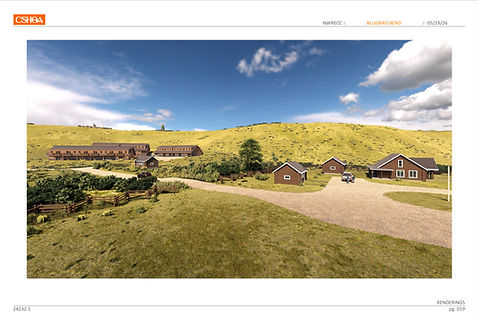
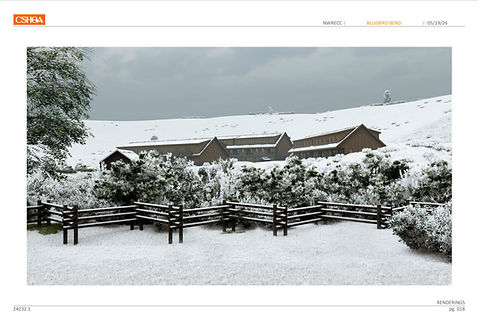
The site plan has three buildings on the east side of the 4-acre property. The buildings will be stick-built with good insulation. The developer’s plan is to have framing done off site so that they can make the most of the short building season. Each townhome unit will have its own entrance and half the units will have a garage. There will also be parking spaces outside. Only the single bedroom units with no garage will be stacked units.
The basic unit layouts are described and linked below.
-
Building 1A - This has a mix of 2- and 3-bedroom units with garages.
-
Building 1B - This unit is similar to 1A with a mix of 2- and 3-bedroom units without garages.
-
Building 2 - This unit consists of 1 bedroom units Four of these units have a garage with living space above. On each end of the building there are 2 stacked 1 bedroom apartments. The bottom floor apartment is ADA compatible.
Renderings
The architectural firm, CSHQA, developed renderings of the site for the cultural resource evaluation by SHPO. These renderings give an idea of what the project would like like from the museum.
Key Aspects of Development & Management
Workforce housing for moderate income households is one of the biggest issues facing communities across the nation. This type of housing is difficult to fund because state and federal funding support generally comes with income restrictions. Most moderate income households do not qualify with the income restrictions. The rents that are appropriate to be charged moderate income households often aren't high enough to support typical developments. Many housing developments now, especially in touristy areas or “resort cities” are only affordable for high income households or become vacation rentals.
There is a vast amount of information on this page as this is a large project with many aspects to consider. The Stanley Workforce Housing Project is intended to meet the needs and desires of the community in providing stable, year-round, affordable housing to the community’s workforce.
The City is navigating three main aspects of the finances and management of the workforce housing project. There are many pieces of the project beyond the three simple questions. All the pieces must work together, for example we can’t build something now that won’t be sustainable because the rents charged won’t cover the cost of management etc. In making decisions the community’s goals and priorities must also be met.
1. How can the City use and/or leverage the available resources to build housing?
-
The City has 4 acres of land intended to be developed for workforce housing, local option tax savings allocated for workforce housing, and a $4 million HUD grant. It is unlikely in the future that the City could obtain another large grant to fund further housing. The community wants workforce housing and to prioritize essential workers.
-
The City can build with just what it has or leverage those resources and funds and work with a developer to increase the amount of impact the resources have.
-
Economies of scale: The infrastructure (ex. sewer, well, water lines, electric) is a relatively fixed cost regardless of how many units are built. If that cost of infrastructure is split between more units, it will decrease as a percentage per unit.
-
If the City just uses the $4 million, approximately 4-5 units could be built that would provide housing for local workers and their families.
-
This does not go far in meeting the need of 100+ employees in the area that are housing deficient and will likely not meet the need of housing for essential workers.
-
There is the potential that more, smaller, and lower quality units could be built with $4 million, however, this doesn’t meet the community’s wishes of building comfortable, quality housing for workers and their families.
-
If the City wants to contribute Local Option Tax savings, a lump sum would be required which would mean a smaller amount overall could be contributed in a financially sound manner.
-
-
The City has chosen to leverage their funds and work with a developer, Northwest, who can obtain further funding through loans. This will provide funding for 20 units to be built in a mix of 1-, 2-, and 3-bedroom units.
-
To keep the project economically viable the City has worked with Northwest to come up with the best financial plan where the City can contribute Local Option Tax savings over time rather than in one lump sum. The City staff, consultants, and attorneys have reviewed the finances and plan.
-
This will likely exceed the current need for housing for essential workers and their families, which will provide housing for other local workers.
-
-
-
2. How is the housing managed financially?
-
Rents must cover the costs of management and if loans are obtained, rent must also cover the cost of the loans. Rents must also be affordable for the prioritized essential workers, as well as other workers.
-
If the City manages a few units will the rent revenue cover the cost and provide revenue to build housing in the future?
-
Initial evaluations show revenue will not support future development, If the rent starts at approximately $1400 for 4-5 units the City may be able to balance revenue with management costs. The City would need to further evaluate the revenue to expense ratio of the project depending on number of units and other factors like included utilities and amenities.
-
It is very unlikely enough revenue from rents will be generated to build future housing. If building affordable workforce housing was a profitable scenario it is highly likely a private company would have already pursued this.
-
-
The City has chosen to work with Northwest. Northwest is responsible for evaluating the finances to ensure the rent covers the cost of management and repaying the loans obtained.
-
The City has worked with Northwest to evaluate the financial plan to meet target rents that are affordable to the majority of prioritized workers. The City, project management team, and City’s attorneys have reviewed the financial plan and the City’s contributions and see no issues.
-
-
3. What is the City’s capacity to manage a large project now, and oversee for the future?
-
Does the City have the capacity to handle a project of this size during development? Also does the City have the capacity to manage a housing development over the next 10, 20, 50, 75, etc. years?
-
What will the staffing look like to manage a project now, and in the future?
-
The City has 2 full-time and 1 part-time staff. These staff are fully occupied managing day to day city business and other smaller grants and projects. At the current staffing levels the City does not have the capacity to manage a housing development during construction or taking on the responsibilities of being a landlord.
-
If the City was to manage the construction of the housing development, they would likely need to hire a project manager. Hiring in Stanley is currently very difficult due to the lack of housing.
-
Long term the City would need to hire someone full-time, or part-time to manage the tenants and housing units. This person would require housing as well.
-
The City would like to be able to provide its staff along with other essential workers housing. This goal will not be met if only 4-5 units are developed as there would be 3-4 City staff that could potentially require housing.
-
-
-
The City has selected Northwest as the developer to act oversee the project during construction and managing the units after they are constructed. The lease and management agreement will be approved by the City and determine how Northwest manages the units. This will ensure that the housing units have professional oversight while being developed and while being managed in the long term. Northwest has a much bigger staffing pool to be able to provide oversight.
-
Low Income vs. Affordable Housing
What is Low Income Housing?
Tenants must be making less than 80% Area Median Income (AMI) and may be eligible for federal programs to assist with rent or housing projects.
Low-income housing is a broad term referring to any housing where rent is affordable to households earning less than 80% of the area median income (AMI) in their region. This includes public housing programs like Section 8. Under these programs, the government pays a portion of the rent, allowing families, seniors, people with disabilities, and individuals with low incomes to stabilize their livelihoods. (Apartmentlist)
AMI is calculated by county. If Stanley’s housing is low income, it will follow the numbers for Custer County. For Stanley’s housing project to be eligible with the low-income housing tax credit funding (LIHTC), tenants must average 55% AMI.
Custer County Area Median Income (AMI) for a family of 4 is $78,800.

In general, any low-income housing project will have rents set based on the standards of the agency providing the funding. The following low income, housing rents are as set by HUD for Custer County.

What is Affordable Housing?
Tenants pay less than 30% of household income on housing.
The U.S. Department of Housing and Urban Development defines “affordable housing” as housing on which the occupant is paying no more than 30 percent of gross income for housing costs, including utilities. Keeping housing costs below 30 percent of income is intended to ensure that households have enough money to pay for other nondiscretionary costs; therefore, policymakers consider households who spend more than 30 percent of income on housing costs to be housing cost burdened. In reality, the definition of affordable housing is nebulous, with different programs and stakeholders often adopting their own slightly different definitions of what is considered “affordable housing.” (National League of Cities)

*Household rates includes total income for all members of the household. (Add two working people’s salary or wage together).
What is Workforce Housing?
Workforce housing is housing set aside for workers in the community.
Workforce housing may be low income but does not necessarily have to have income restrictions. Ideally all housing is considered affordable, especially workforce housing.
The housing that occurs on the 4 acres given to the City by Simpson’s bill PL 114-46 is “to provide workforce housing for persons employed in the City or its environs.”
What are the Guidelines and Requirements for this Project?
Land Restrictions
-
The 4-acres property on Museum Drive located near the Museum was given to the City by Public Law 114-46. The property was officially transferred from the Sawtooth National Forest to the City of Stanley in 2019. This law requires that the property be used for workforce housing for Stanley and its environs. This means the only use this piece of land can have is for workforce housing.
-
The law states that the City can develop the property, or the City may work with a developer to build housing. If the City does not use the property for workforce housing, the land will revert back to the Forest Service although there are no specifications on how or when that would happen.
Financial Restrictions
-
The City of Stanley obtained a grant from Housing and Urban Development (HUD) for 4 million dollars in 2024. This funding is to be used to build workforce housing. There are no restrictions on income levels for housing built with this funding, but the City is required to follow federal requirements as we are using federal funding.
-
The City was hoping to apply for a Community Development Block Grant (CBDG) and had contracted with Altura to help the City secure this low-income loan to help cover the cost of the infrastructure of this project. Using CBDG funding came with federal requirements including the Buy America Build America (BABA) requirements and income restrictions. The City decided not to pursue CBDG funding as we didn't want income restrictions on the housing and the BABA requirements would have also increased costs of the project.
-
A certain amount of infrastructure is required regardless of how many units are built (roads, sewer, wells, electric etc.). The more units that are built, the more this cost can be shared between units; there are economies of scale. Since the City is not obtaining low-income loans or the CBDG, further funding is needed to develop this project to a scale that will meet the community's needs of housing.
-
Municipalities, like the City, cannot obtain loans without passing a bond that must go to a general election and be passed by a super majority, a two-thirds (66.67%) vote.
-
The developer, Northwest, can obtain loans to fund the project. John Vance, with Northwest, has been working with banks to find loans with low interest rates, and ones like a standard mortgage.
-
The City has funding from the Local Option Tax that has been put aside to support the workforce housing project. The City may only allocate already saved funds to this project; no future funding or income may be committed.
Governmental Restrictions
Federal
-
The project must follow all federal guidelines required by HUD as part of the grant. This includes environmental analyses, cultural surveys, wetland surveys, market studies, and other reporting.
City
-
The workforce housing project is located within City Limits so all City Codes, including building regulations will apply to the project.
Who is the Developer?
Northwest Real Estate Capital Corp
Northwest is a 501(c)(3) Idaho corporation specializing in the property management, development, and rehabilitation of HUD/Section 8, Rural Development, and Tax Credit Housing. The City Council selected them to help develop workforce housing for Stanley as they received the highest score in the RFQ bid process.
Northwest is based out of Boise and the City of Stanley has been working closely with Northwest's Director of Development, John Vance. Northwest is experienced in developing affordable housing, managing the entirety of complex projects, and working with complex financing systems to fund affordable housing. They have worked with Stanley to learn the community's needs and goals for the workforce housing and have developed building, site, and financial plans.
As a non-profit, Northwest is not trying to maximize profits like most developers or for-profit corporations would do. In the current financial plan, the only predicted revenue is estimated at $40,000 annually which is required for by the banks for the loans that Northwest will obtain. The City will receive half of the actual revenue to reinvest in workforce housing.